Pavement Access That Limits Surface Damage
Core Sawing & Asphalt Coring in Grand Junction for roadway projects requiring controlled underground access
Rough Country Locates LLC provides core sawing and asphalt coring services that create clean, precise openings in paved surfaces when underground utilities need to be exposed, inspected, or repaired. Before vacuum excavation or potholing work begins, core sawing removes a controlled section of asphalt or concrete, allowing crews to reach subsurface infrastructure without damaging surrounding pavement or creating jagged edges that complicate restoration. This approach matters for projects where minimal disruption, accurate access points, and proper surface preparation are required before deeper excavation work can proceed safely.
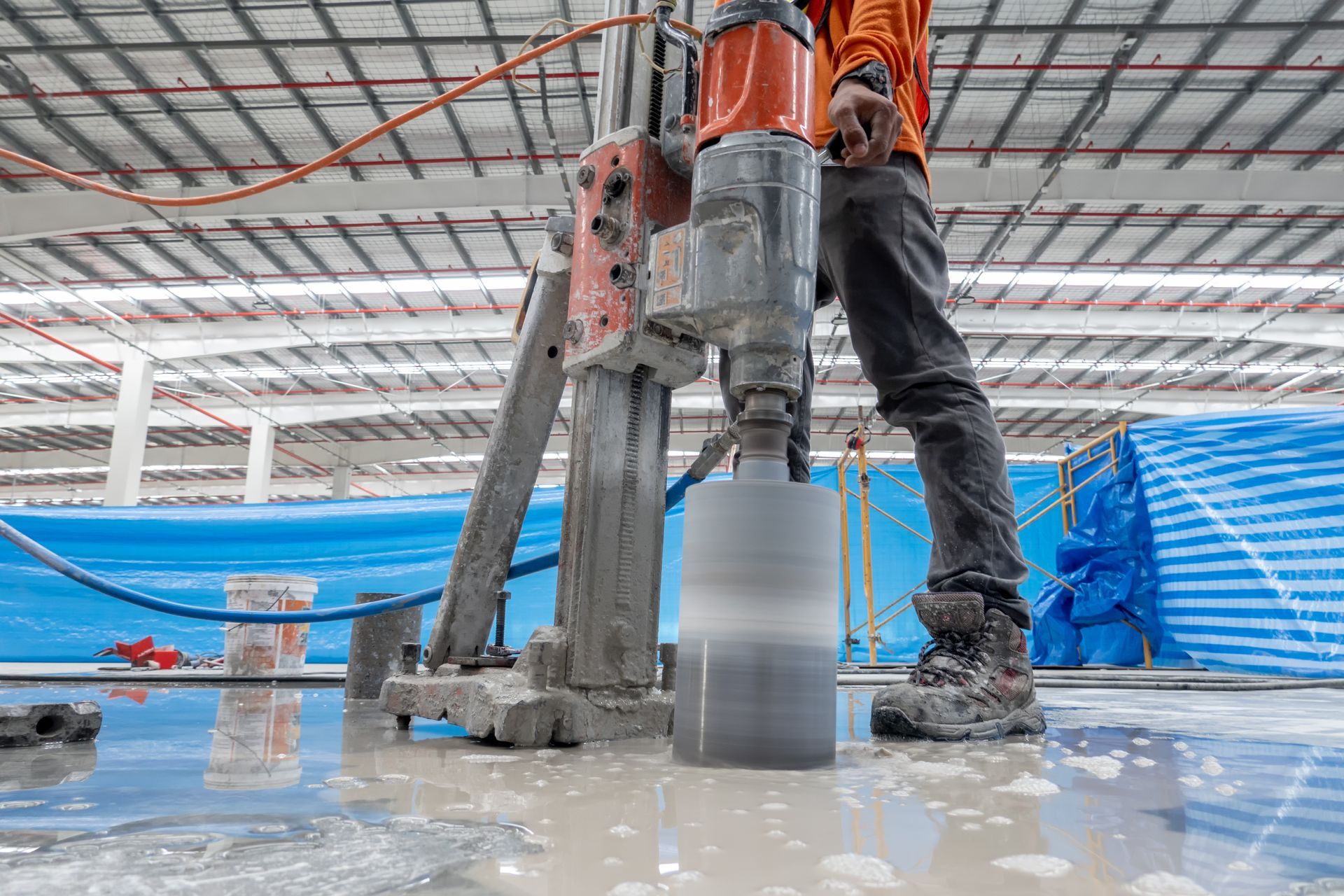
The process uses diamond-tipped saw blades to cut through asphalt or concrete in circular or rectangular patterns, depending on the size and shape of the access area needed. Once the cutting is complete, the core section is lifted out, creating an opening that exposes the subsurface layer for vacuum excavation, utility verification, or inspection work. This method prevents the cracking, chipping, and irregular edges that occur when pavement is broken with jackhammers or mechanical tools, which makes backfilling and surface restoration more difficult and less durable over time.
Schedule a project evaluation to determine the size and placement of coring access points before subsurface work begins.
What Happens During Controlled Pavement Removal
Core sawing starts with marking the exact location where access is needed, based on utility maps, locating data, or GPS coordinates from previous as-built surveys. The saw cuts vertically through the pavement to a predetermined depth, creating a boundary that isolates the section to be removed from the surrounding surface. Water is used during cutting to control dust and cool the blade, which prevents overheating and maintains cutting precision throughout the depth of the pavement layer.
After the core is removed, you'll see a clean-edged opening with vertical walls that align with the original surface grade, making it easier to measure excavation depth accurately and restore the pavement flush with the existing roadway once subsurface work is finished. The surrounding pavement remains structurally intact because no impact force or vibration was used during removal, which reduces the risk of hairline cracks extending beyond the work zone. This level of control becomes especially important on aging pavement or in high-traffic areas where surface integrity affects long-term performance after restoration.
The service works alongside vacuum excavation and utility locating efforts, particularly when projects require multiple access points or when utility depth and position need verification before larger-scale excavation. Coring can be scaled to match the project scope, whether that means a single small opening for fiber optic inspection or multiple larger cores across a roadway section where water, sewer, or gas lines need exposure for repair planning.
Questions Before Starting Pavement Access Work
Projects involving underground utility access often raise questions about how coring integrates with locating work and what the process involves from start to finish.
What size core is needed for utility access work?
The diameter depends on the type of utility being accessed and the tools required for inspection or repair, with most utility verification cores ranging from six to twelve inches, while larger repair access points may require eighteen-inch or rectangular cuts to accommodate excavation equipment and worker access.
How does coring work with vacuum excavation?
Core sawing removes the pavement layer first, creating a defined access boundary, and then vacuum excavation removes the subsurface material without disturbing surrounding soil or utilities, which keeps the work zone controlled and reduces the risk of accidental utility strikes during digging.
When is coring preferred over breaking pavement?
Coring is used when surface restoration quality matters, when surrounding pavement must remain undisturbed, or when precise access dimensions are required for alignment with underground infrastructure, while breaking pavement is faster but leaves irregular edges that complicate backfilling and create weaker repair zones.
What happens to the pavement after coring?
The removed core section is set aside if it will be reused as part of the backfill base, or disposed of if new material will fill the opening, and once subsurface work is complete, the opening is backfilled in layers and topped with new asphalt or concrete that matches the existing surface grade and compaction requirements.
How does Grand Junction's climate affect coring work?
Temperature fluctuations and freeze-thaw cycles common in the region can cause pavement to expand and contract, which makes clean cuts more important because irregular edges allow moisture infiltration that accelerates cracking and surface degradation after the area is restored.
Rough Country Locates LLC integrates core sawing with utility locating and vacuum excavation services to provide complete subsurface access solutions for infrastructure projects. Request an on-site assessment to review pavement conditions and plan coring locations based on utility placement and project requirements.